
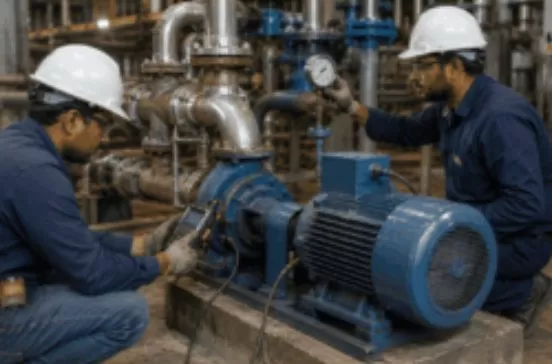
A Roots blower that runs hot is almost never the problem itself. It is a warning that the blower is working against more pressure than it was sized for, is not getting enough cool air in, or is losing energy to friction somewhere in the drive. Find which of those three it is, and the fix is usually simple.
This guide walks through the seven causes we see most often on site visits to STPs, ETPs and process plants, with checks your maintenance team can do before calling for service.
Quick diagnosis table
| What you notice | Most likely cause | First check |
|---|---|---|
| Casing and discharge pipe very hot, motor current high | Over-pressure in the system | Discharge pressure gauge vs rated pressure |
| Hot casing, air flow lower than before | Choked inlet filter or suction restriction | Inlet filter condition |
| Gear end or bearing end running hot | Low, wrong or excess oil | Oil level in sight glass, oil grade and age |
| Belt squeal, belt dust, hot pulleys | Loose, worn or misaligned belts | Belt tension and pulley alignment |
| Knocking or metallic rubbing | Lobe contact from worn gears, bearings or clearances | Stop and inspect, do not keep running |
| Motor trips but blower pressure is normal | Electrical issue | Supply voltage on all three phases |
| Loud pulsing noise, piping vibrates | Silencer or piping issue | Silencer condition and pipe supports |
1. Over-pressure: the most common cause
A Roots blower is a positive displacement machine. It does not create pressure on its own: it pushes a fixed volume of air, and the pressure rises to whatever the system demands. If the system resists more, the blower works harder, the air heats up as it is compressed, and the motor draws more current.
Common reasons pressure creeps up:
- Fouled or clogged diffusers in the aeration tank.
- A discharge valve left partly closed after maintenance.
- A non-return valve stuck or partly shut.
- Sludge build-up raising the effective water depth.
- A pressure relief valve set too high, or seized.
Fix: compare the discharge gauge reading against the blower’s rated pressure. Clean or replace diffusers, open valves fully, and test the relief valve. Never use the discharge valve to throttle a Roots blower: it only raises pressure and heat.
2. Choked inlet filter or suction restriction
Much of a blower’s cooling comes from the air it draws in. A dusty or blocked inlet filter starves the blower, so it runs hotter and delivers less air. This is the single easiest problem to prevent.
Fix: clean or replace the inlet filter element on a fixed schedule, more often in dusty sites like foundries and cement plants. Our blower maintenance checklist for continuous duty sets out the intervals.
3. Lubrication problems
The timing gears and bearings run in oil. Too little oil means metal-to-metal wear and heat. Too much oil is just as bad: the gears churn it, which raises temperature and can push oil past the seals. Old or wrong-grade oil loses its film strength.
Fix: keep the oil at the middle of the sight glass with the blower stopped. Use the grade the manufacturer recommends and change it on schedule.
4. Belt and alignment issues
Over-tight belts load the bearings. Loose belts slip, squeal and generate heat that travels into the shaft. Misaligned pulleys or a base frame that is not level (a “soft foot”) add vibration and bearing load.
Fix: check belt tension and pulley alignment, replace belts as a matched set, and confirm the base frame is shimmed level. Correct alignment at the start is covered in our installation support.
5. Worn lobes, gears or bearings
The running clearances inside a Roots blower are very small. As bearings or timing gears wear, the lobes can shift and touch each other or the casing. Wear also lets air slip back from discharge to suction, so the blower heats the same air twice and delivers less.
Signs: knocking, metallic rubbing, falling air flow at the same speed and pressure.
Fix: stop the blower. Running it with lobe contact can wreck the rotors and casing. This needs a proper strip-down and genuine spare parts such as bearings, timing gears, seals and lobes.
6. Electrical problems
Sometimes the blower is fine and the motor is the issue. Low voltage or unbalanced voltage between phases pushes motor current up and trips the overload. A motor that was undersized with no margin will also trip as soon as pressure rises slightly.
Fix: measure the voltage on all three phases under load and compare current against the motor nameplate. If the motor has no margin over the blower’s absorbed power at actual pressure, it needs resizing.
7. Noise and pulsation from silencers and piping
Roots blowers pulse by nature, especially twin lobe designs. A degraded silencer, loose pipe supports or undersized discharge piping turns that pulsation into loud noise and vibration that can crack welds and flexible joints over time.
Fix: inspect silencers, tighten supports and check pipe sizing. For sites near homes, hospitals and offices, a tri lobe blower with an acoustic hood brings noise down significantly. Unsure whether you even need a Roots blower for your duty? Our comparison of Roots blower vs ring blower can help.
When to stop the blower immediately
Shut down and call for service if you notice any of these:
- Knocking, grinding or metallic rubbing sounds.
- Smoke, burning smell or oil leaking from seals.
- Sudden rise in vibration.
- Discharge temperature far above normal readings.
In an STP, keep the standby blower running while the duty unit is inspected. If you have no standby, plan one: the sewage treatment plant will start to smell within hours of aeration stopping.
Was the blower sized correctly in the first place?
Repeated overheating on a new installation often points to sizing, not maintenance. A blower selected on air volume alone, without real discharge pressure and site temperature, will run at its limit from day one. Our guide on how to select a Roots blower for STP aeration shows how to size against actual conditions. And if you are weighing a replacement, see what really drives cost in our Roots blower price guide.
Prevention: a simple routine
- Daily: check discharge pressure, temperature, unusual noise.
- Weekly: check oil level and belt condition; rotate duty and standby.
- Monthly: clean the inlet filter, check belt tension.
- As per running hours: oil change, bearing inspection.
An annual maintenance contract puts all of this on a schedule so problems are caught before they cause a breakdown.
Frequently asked questions
Why is my Roots blower overheating?
The most common causes are a choked inlet filter, discharge pressure above rating, low or wrong oil, and worn lobes or bearings.
Why does my Roots blower motor keep tripping?
Usually over-pressure in the system, an undersized motor, or low or unbalanced supply voltage.
Is a hot Roots blower casing normal?
The casing does run warm, because compressing air generates heat. A sudden rise against your usual readings is the warning sign.
Can I reduce Roots blower noise without replacing it?
Often yes: repair the silencer, fix pipe supports, or add an acoustic hood. For a new unit, a tri lobe design is quieter.
Need help with a hot or noisy blower?
Our troubleshooting and repair team diagnoses overheating, noise, vibration and low air flow on site, and arranges spares quickly. Call +91 94870 69937 or book a site visit.
Related guides: Blower Maintenance Checklist · Roots Blower vs Ring Blower · Roots Blower Price in India